


Table of Contents
- Why HVAC Installation Matters for Rental Properties
- Legal Obligations and Minimum Energy Efficiency Standards
- Rental Property Heating and Cooling Requirements: What Landlords Must Provide
- Best HVAC Brands for Rental Properties: Durability and Tenant-Friendly Options
- Tax Depreciation for HVAC Installation: Financial Benefits for Landlords
- Step-by-Step Installation Process for Rental Properties
- Maintenance Responsibilities and Tenant Rights
- Conclusion
- Frequently Asked Questions
Last Updated: September 30, 2026
Why HVAC Installation Matters for Rental Properties
Rental property owners must decide whether to upgrade to modern heating and cooling systems or maintain aging equipment that costs more to run and frustrates tenants.
Modern HVAC systems attract quality tenants faster, command higher rental yields, and reduce maintenance emergencies. Energy efficiency standards are tightening, and non-compliance exposes landlords to regulatory risk.
Landlords who invest in efficient heating and cooling systems see improved tenant retention, reduced emergency repair calls, and measurable property value appreciation.
This guide covers everything you need to know about HVAC installation for rental properties, from legal obligations through installation logistics to the financial benefits that make the investment worthwhile.
Legal Obligations and Minimum Energy Efficiency Standards
Landlords must comply with statutory responsibilities regarding heating and cooling systems. Minimum energy efficiency standards are becoming stricter across all states and territories.
Each state maintains rental laws requiring landlords to ensure properties meet minimum standards for liveable conditions, which increasingly includes adequate heating and cooling capacity during extreme weather.
Properties must meet minimum performance thresholds under building codes and energy rating systems. Confirm your state’s current requirements before installation; non-compliance can result in fines or forced remediation at your expense.
According to the Australian Building Codes Board standards, climate control systems must meet specific performance benchmarks based on your region’s climate zone. This isn’t optional guidance, it’s regulatory requirement. If your property falls below minimum standards, you’re legally obligated to upgrade.
Check your state’s rental authority website for current minimum standards before planning installation. Standards change, and landlords are responsible for compliance. Waiting until a tenant complaint arrives is far more expensive than proactive compliance.
Rental Property Heating and Cooling Requirements: What Landlords Must Provide
What “liveable conditions” means:
- Adequate heating during winter months (typically minimum 18°C in living areas)
- Adequate cooling during summer (no statutory maximum, but properties must not become uninhabitable during heat events)
- Systems capable of maintaining these temperatures without excessive cost to the tenant
- Regular maintenance to ensure systems remain functional
In Victoria’s summer climate, properties without cooling face increasing tenant demand and potential compliance issues during extreme heat events.
An air conditioning failure during a heat wave is classified as urgent repair requiring landlord response within 24-48 hours. Planned HVAC installation for rental properties is a capital improvement following a different approval and timeline process.
Tenants cannot be charged for essential repairs or system maintenance. Tenants are responsible for reasonable use (not blocking vents, allowing access for maintenance). Document all maintenance and keep records of work completed.
Best HVAC Brands for Rental Properties: Durability and Tenant-Friendly Options
For rental properties, prioritise proven reliability, simple operation, low maintenance burden, local parts availability, and reasonable noise levels.
Split systems are the most popular choice for rental properties: straightforward to operate, reliable, and cost-effective to maintain.
A mid-range system with strong local support and easy maintenance often outperforms expensive brands requiring specialised technicians and expensive parts.
Select systems based on proven performance in similar properties, not marketing claims.
For rental properties, reliability and simplicity beat premium features. A durable mid-range system with excellent local support outperforms an expensive brand requiring specialised maintenance.
Tax Depreciation for HVAC Installation: Financial Benefits for Landlords
One significant benefit of HVAC installation for rental properties is tax depreciation. However, depreciation is only one part of the financial picture. A complete cost-benefit analysis helps landlords make informed investment decisions.
Understanding Depreciation
The Australian Taxation Office (ATO) recognises HVAC systems as plant and equipment with a finite useful life. You can claim depreciation deductions over the system’s lifespan, reducing your taxable rental income.
The Complete Financial Picture: Beyond Depreciation
Upfront costs: System purchase and installation ($3,500-$8,000), permits and approvals ($200-$500), strata approval fees ($100-$300). Total: $3,800-$8,800.
Calculating Your Payback Period
Conservative scenario: $5,000 investment with $1,554 annual benefit (energy savings $400, rental yield improvement $1,000, tax benefit $154) yields a payback period of approximately 3.2 years. Optimistic scenario: $5,000 investment with $2,154 annual benefit yields a payback period of approximately 2.3 years.
Compliance Risk and Future-Proofing
Installation protects against regulatory risk. From 2027, rental properties will face stricter cooling requirements during extreme heat events. Properties without modern systems may face forced upgrades at landlord expense or rental restrictions during non-compliance periods.
Record-Keeping for Tax Claims
Keep detailed records of all installation costs, materials, labour, permits, and associated work. Consult a tax professional to ensure you’re claiming depreciation correctly and maximising available deductions.
Depreciation is only available for investment properties, not owner-occupied homes. If you later sell the property, you may face capital gains tax on the depreciation claimed, so plan accordingly with your tax advisor. Additionally, if you claim depreciation and later convert the property to owner-occupied use, you may lose some deductions.
Step-by-Step Installation Process for Rental Properties
Installing HVAC systems in rental properties requires careful planning and coordination. The process differs from owner-occupied homes because tenant communication, strata approvals, and regulatory compliance are critical. Understanding each phase prevents delays and ensures your system meets current and future standards.
1. Assessment and System Selection
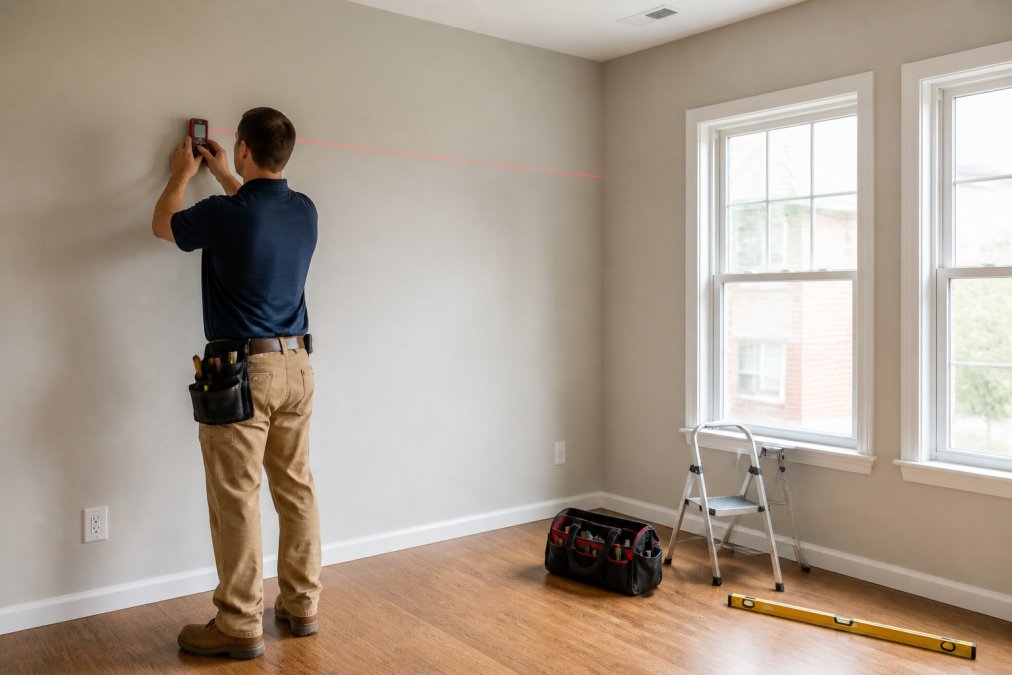
Start with a professional assessment of your property’s heating and cooling needs: a technical evaluation of your space, climate zone, insulation, and tenant requirements.
2. Strata Approval and Regulatory Permits
If your property is part of a strata scheme, you must obtain strata approval before installation. This is often the longest phase of the process.
3. Installation and Commissioning
Pre-installation coordination: Confirm the installation date with your tenant one week in advance. Ensure access to both indoor and outdoor areas. Arrange for furniture or obstacles to be moved. Confirm parking for the installer’s vehicle.
4. Tenant Communication, Handover, and Documentation
Handover documentation should include: Operating instructions for thermostat operation and mode selection. Maintenance schedule for filter changes (typically monthly). Warranty information (typically 5-10 years). Emergency contact for urgent failures. Prohibited actions (not blocking vents, not adjusting refrigerant lines, allowing access for maintenance).
5. Post-Installation: Compliance and Future-Proofing
Document your system’s specifications: Energy rating (typically 6-star), cooling capacity in kilowatts, and installation date and compliance certification. Keep these records for future regulatory or sales purposes.
The longest phase of HVAC installation for rental properties is typically strata approval, not the physical installation. Plan 3-6 weeks for approvals, 1-2 weeks for permits, and 1-3 days for installation. Budget accordingly and communicate timelines clearly with your tenant.
Maintenance Responsibilities and Tenant Rights
Landlord responsibilities:
- Annual professional servicing (typically spring before cooling season)
- Refrigerant top-ups if leaks occur
- Compressor or component repairs
- System replacement if beyond economic repair
- Emergency repairs (within 24-48 hours for urgent failures)
Tenant responsibilities:
- Monthly filter changes (or as specified by manufacturer)
- Keeping vents unobstructed
- Reporting problems promptly
- Allowing access for maintenance and repairs
- Reasonable use (not forcing systems beyond design parameters)
Establish a maintenance schedule and communicate it clearly. Annual servicing before summer and winter seasons prevents emergency failures during peak demand. Most landlords budget $300-500 annually for professional maintenance, a small cost compared to emergency repair bills.
Preventive maintenance is far cheaper than emergency repairs. Annual professional servicing costs less than a single emergency callout and prevents tenant complaints during extreme weather.
Conclusion
HVAC installation for rental properties is a strategic investment that addresses legal obligations, improves tenant satisfaction, and delivers measurable financial returns through energy efficiency and tax depreciation. The decision isn’t whether to upgrade, it’s when and how to do it correctly.
| Installation Phase | Typical Duration | Key Consideration |
|---|---|---|
| Assessment & Planning | 1-2 weeks | Confirm strata approval requirements early |
| Permits & Approvals | 2-4 weeks | Budget time for strata or council sign-off |
| Installation & Commissioning | 1-3 days | Coordinate with tenant; minimal disruption |
| Handover & Documentation | 1 day | Provide clear operating instructions |
| Annual Maintenance | Ongoing | Schedule spring/autumn servicing |
Frequently Asked Questions
Are landlords required to provide heating and cooling in rental properties?
Residential tenancy legislation requires landlords to maintain rental properties in a habitable condition, which includes providing adequate heating and cooling systems where these are fixed installations. If a cooling or heating system exists as a fixed device, landlords must keep it in working order. However, requirements vary by state. Check your local residential tenancy legislation to understand your specific obligations, as some jurisdictions have explicit requirements while others rely on general habitability standards.
What are the minimum energy efficiency standards for rental HVAC systems?
HVAC systems must comply with the National Construction Code and relevant state building standards. Energy efficiency standards focus on the performance of the system itself rather than mandatory upgrades for existing rentals. When installing new systems, select equipment that meets current energy rating requirements. Systems with higher energy ratings reduce operating costs for tenants and improve the property’s marketability. Check with your state’s building authority for current standards applicable to rental properties.
Can I claim a tax deduction for HVAC installation in an investment property?
Tax depreciation for HVAC installation depends on whether the system is considered a capital improvement or a repair. Generally, new HVAC installations are capital improvements and may be eligible for depreciation deductions over time under the Capital Works Deduction scheme. However, this is complex and varies by circumstance. Consult your accountant or tax adviser to determine your eligibility, as claiming incorrectly can trigger penalties. Keep detailed records of all installation costs and dates.
How do I choose the right HVAC system for a rental property?
Select best HVAC brands for rental properties based on durability, low maintenance requirements, and tenant-friendly operation. Split systems and ducted air conditioning are popular for rentals because they’re reliable and straightforward for tenants to use. Consider the property’s layout, climate zone, and tenant turnover. Avoid oversized systems that waste energy and money. A professional assessment will determine the correct capacity. Look for systems with good warranty coverage and readily available service support in your area.
Who is responsible for HVAC maintenance in a rental agreement?
Landlords are responsible for maintaining fixed cooling and heating systems in working order. Routine maintenance like filter changes may be the tenant’s responsibility depending on the lease agreement, but major repairs are the landlord’s obligation. Clearly outline maintenance responsibilities in the lease to avoid disputes. Regular servicing by a qualified technician prevents costly breakdowns and ensures the system operates efficiently, protecting your rental income and property value.