


Last Updated: November 4, 2026
Quick Summary
To learn how to reduce noise in ducted heating systems, start with the source: open every vent fully, clear furniture and dust from grilles, clean or replace the filter, and tighten loose screws and panels. If rattling, humming, banging or hissing continues, book a technician rather than opening the unit yourself.
- Most ducted heating noise comes from airflow restrictions, loose panels and screws, vibration, and the fan motor.
- Closing vents in unused rooms raises static pressure and can make the fan roar in rooms still open.
- A dirty filter is the most common cause of a loud system because the fan works harder to pull air.
- Never tape over or block a vent, as it can damage the fan or heat exchanger.
- Call a technician immediately if you smell gas, see scorch marks, or hear metallic scraping.
Table of Contents
- Noisy Ducted Heating Causes: What’s Actually Making the Sound
- How to Reduce Noise from Heating Vents and Grilles
- Ductwork Rattling and Banging: Tightening the Loose Links
- Ducted Heater Filter Maintenance to Cut Airflow Roar
- A Step-by-Step Diagnostic Sequence for Ducted Heating Noise
- Safety Boundaries: What You Should Never Attempt Yourself
- Book a Professional Ducted Heating Noise Assessment
- Frequently Asked Questions
Noisy Ducted Heating Causes: What’s Actually Making the Sound
If you want to know how to reduce noise in ducted heating systems, start with the source. Most ducted heating noise comes from four places: airflow restrictions, loose panels and screws, vibration, and the fan motor. The cause is usually simpler than homeowners expect.
Here is the useful part most guides skip: a ducted heater should make some sound. Air moving through vents is normal. What is not normal is rattling, banging, hissing or a deep hum that gets worse over time. Those point to a fault, not a design flaw.
A ducted heating system is a forced-air setup where one heating unit pushes warm air through a network of ducts to vents in each room. Because the whole house shares one fan and one set of ducts, a single loose connection can send noise through every room.
The main causes of noisy ducted heating:
- Restricted airflow from a clogged filter or blocked vent
- Loose screws and panels that vibrate as air passes
- Duct connections that have worked free over time
- Fan and motor wear that produces humming or grinding
- Duct design faults where air moves too fast for the duct size
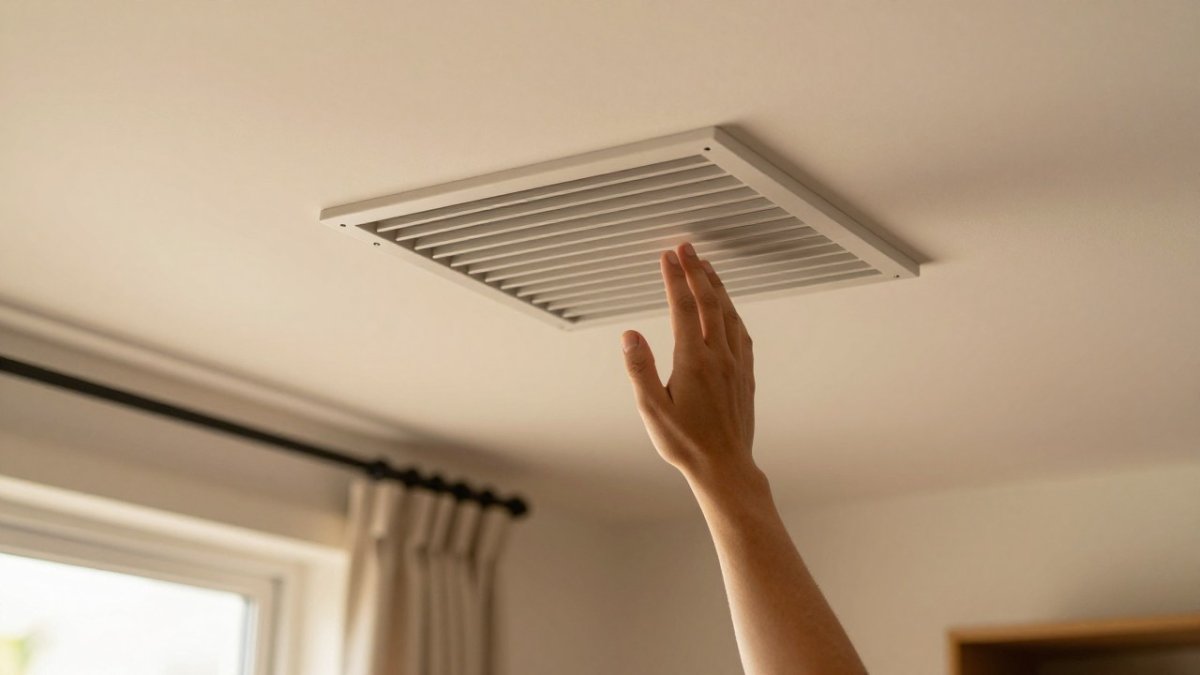
How to Reduce Noise from Heating Vents and Grilles
The quickest win is at the vent itself. Because every vent shares one fan and one duct network, a single restricted grille can raise pressure across the whole system and make every room louder.
Try these steps in order:
- Open every vent fully. A half-closed vent forces air through a smaller gap and creates a whistle. In ducted heating, closing vents in unused rooms is a common habit that backfires: it increases static pressure and can make the fan roar in the rooms that are still open.
- Move furniture off the vents. Rugs, couches and curtains over a floor vent choke airflow and raise the noise. Leave at least the full grille area clear.
- Check for dust build-up on the grille. Seasonal dust on the slats narrows the gaps and can turn a gentle flow into a hiss. Vacuum the face of the grille with a brush attachment.
- Test one room at a time. Close doors and listen. You will hear which vent is the loud one. Note whether the noise changes when the system starts, runs steady, or shuts down.
If a single vent whistles while the rest are quiet, the problem is local: check that grille for bent slats, a partly closed damper, or a gap around the frame. If every vent roars, the issue is upstream: airflow, filter or fan. That distinction saves you time before you touch anything else.
Watch out: do not tape over or block a vent to quieten it. Blocking a vent raises pressure in the ductwork and can damage the fan or the heat exchanger, and it often makes the remaining vents louder.
Normal versus fault at the vent. A steady, soft rush of air is normal. A whistle that appears only when the system ramps up, a rattle that stops when you press the grille, or a hiss at the joint between grille and ceiling are fault signals. If the grille itself is loose, tighten the screws firmly but not hard enough to crack the plastic or strip the thread.
Practical noise targets. There is no single number that applies to every home, because acceptable levels depend on the room, the equipment and how the system was designed. Treat a noticeable new whistle or rumble as the trigger for further checks rather than chasing an absolute decibel figure.
Ductwork Rattling and Banging: Tightening the Loose Links
Rattling is the easiest noise to fix and the one most people miss. It usually comes from a loose panel, a loose screw, or a duct connection that has shifted.
Work through this checklist:
- Tighten the screws on each vent grille
- Check the access panel on the heating unit
- Look for ducts resting against timber or metal
- Feel for gaps where duct sections join
- Listen for a bang at start-up, which points to expanding ductwork
A common mistake is over-tightening. Grilles crack, and screws strip the thread. Firm is enough.
Banging at start-up is different. That sound comes from ductwork flexing as it heats, and it often means the duct run needs support or a sound damper fitted by a technician.
Ducted Heater Filter Maintenance to Cut Airflow Roar
A dirty filter is the most common cause of a loud system. When the filter clogs, the fan works harder to pull air, and that strain turns into a constant roar.
Filter maintenance is simple and cheap:
- Check the filter at the start of every heating season
- Clean or replace it every few months during heavy use
- Vacuum the filter gently rather than washing it, unless the manufacturer says otherwise
- Keep the return air grille clear of dust and pet hair
If the noise drops after a clean filter goes in, you have found your cause. If it does not, the fan or ductwork needs a closer look. Either way, a clean filter is the cheapest noise reduction you can do.
A Step-by-Step Diagnostic Sequence for Ducted Heating Noise
Use this order. It moves from the easiest check to the ones that need a technician, so you do not waste a call-out on a loose screw.
Step 1: Note the type of sound and when it happens. Rattling, whistling, humming, banging and hissing each point to a different cause.
Step 2: Test the vents. Open all of them and listen room by room. If one vent is loud, the problem is local. If all are loud, look upstream.
Step 3: Check the filter. Clean or replace it, then run the system again. A dirty filter is the most common cause of a loud system because the fan works harder to pull air.
Step 4: Tighten visible screws and panels. Only the ones you can safely reach without opening the heater casing or climbing into the roof space.
Step 5: Compare normal and fault sounds. A steady hum and a soft rush of air are normal. Grinding, banging, a new whistle, or a hum that gets louder over weeks is not.
Step 6: Call a technician if the noise continues after steps 1 to 5, or immediately if you smell gas, see scorch marks, or hear a metallic scraping from the unit.
| Sound | Likely Cause | What to Do |
|---|---|---|
| Rattling | Loose screw, panel or grille | Tighten visible screws; if it persists, book a technician |
| Whistling | Restricted or excessive airflow at a vent or damper | Open vents fully, clear obstructions; a technician can adjust dampers or duct size |
| Humming | Fan motor wear or mounting looseness | Stop DIY checks; book a technician |
| Banging at start-up | Duct expansion or poor support | Note the timing; a technician can add support or a sound damper |
| Hissing | Duct leak or connection gap | Do not tape over it; book a technician to reseal the joint |
| Grinding or scraping | Fan or motor fault | Turn the system off and book a technician |
How to tell normal from fault. The useful test is change over time: a sound that was always there and has not worsened is usually normal, while a new sound or a sound that is getting louder is a fault.
Measuring noise consistently. Treat readings as a comparison tool rather than an absolute standard, because acceptable noise depends on the room, the equipment and how the system was designed.
Safety Boundaries: What You Should Never Attempt Yourself
Some jobs are safe for a homeowner. Others are not, and gas ducted heating sits firmly in the second group.
Never do these yourself:
- Open the heating unit casing
- Touch gas lines or valves
- Work on electrical components or the fan motor
- Climb into a roof space to reseat ductwork
- Tape over or block a vent to “quiet” it
Watch out: blocking a vent to stop a whistle raises pressure in the ductwork and can damage the fan or the heat exchanger. That is a repair bill far larger than the noise you were trying to fix. If you are weighing repair against replacement, see the cost of replacing ducted heating before deciding.
Book a Professional Ducted Heating Noise Assessment
Some noises need ears and tools on site. If you have checked the vents, cleaned the filter and tightened what you can reach, and the system still rattles, hums or bangs, it is time for a proper look.
At Premium Air, we offer one point of contact from your first call to final sign-off, and independent brand advice based on time-proven performance rather than sales bias. You can see our heating services or contact us to arrange a visit.
Get started with Premium Air and get your ducted heating running quiet again.
Frequently Asked Questions
Why is my ducted heating system making noise?
Ducted heating noise usually comes from four sources: loose panels or screws vibrating, ductwork connections that have worked free, restricted airflow forcing the fan to work harder, or a worn fan motor. Seasonal dust and a clogged filter make airflow noise worse. Work through a diagnostic sequence: check filters first, then grilles, then accessible duct joints, and listen to whether the sound changes when you adjust the fan speed. If banging or grinding persists after those checks, a technician should inspect the fan and motor.
Is it normal for ducted heating ducts to bang or pop?
Some light popping as metal ductwork expands with heat is normal in the first few minutes of a cycle. Loud, repeated banging is not. It usually points to ductwork rattling and banging caused by loose connections, undersized ducts, or air pressure that is too high for the system. Tighten accessible joints and check that no vents are blocked. If the noise continues, ask a technician to measure static pressure and confirm the duct design suits the unit.
Can dirty filters make ducted heating noisy?
Yes. A clogged filter restricts airflow, and the fan has to push harder to move the same volume of air. That produces a louder roar at the vents and can increase vibration through the ductwork. Ducted heater filter maintenance is the cheapest fix on the list: inspect the filter monthly during heavy use, clean reusable filters as directed, and replace disposable ones when they are visibly loaded with dust. Most homeowners notice a clear drop in airflow noise after a filter change.
When should I call a technician about noisy ducted heating?
Call a technician if you hear grinding, scraping or metallic clattering from the heating unit itself, if the noise started suddenly, or if it continues after you have checked filters, grilles and accessible duct joints. Also call if you smell burning or the system short-cycles. These point to fan motor wear or a safety issue rather than a simple rattle. A professional assessment confirms the noise source and whether the duct design or fan settings need adjusting.
A quiet system is usually a well-maintained one. Start with the filter and the vents this weekend, and call in a professional before a small rattle becomes a repair. Premium Air offers engineered heating solutions, independent brand recommendations and removal of your old unit as part of installation. Get a free quote and let us find the source of the noise.