


Table of Contents
- Why energy-efficient heating matters now
- Reverse-cycle air conditioning and heat pump technology
- Hydronic heating systems: efficiency and comfort
- Electric vs gas heating: operating costs and carbon emissions
- Minimum energy efficiency standards Victoria
- Victorian Energy Upgrades program: rebates and financial support
- Retrofitting and integration with solar and battery storage
- Conclusion
- Frequently Asked Questions
Last Updated: September 18, 2026
Why energy-efficient heating matters now
Energy efficient heating is becoming essential for Melbourne homeowners as regulations tighten and energy costs rise.
From 2027 onwards, rental properties in Victoria must meet minimum energy efficiency standards. The decisions you make now directly affect your energy bills, comfort, and compliance with upcoming requirements.
The most common question is: which heating approach delivers the best balance of efficiency, cost, and performance? The answer depends on your current setup, your climate zone, and your long-term priorities.
If your heating system is over 15 years old, replacement often costs less over a decade than continuing to run an inefficient unit. Modern systems recover their upfront cost through lower operating expenses.
Reverse-cycle air conditioning and heat pump technology
Reverse-cycle air conditioning (heat pump technology) is the most efficient way to heat and cool most Melbourne homes. A single unit moves heat rather than generating it, dramatically reducing energy consumption.
The system extracts heat from outside air and transfers it indoors; in summer, it reverses to remove indoor heat. The coefficient of performance (COP) for modern units typically ranges from 3 to 5, meaning for every kilowatt of electricity consumed, the system delivers 3 to 5 kilowatts of heating or cooling.
Split-system units are popular in Melbourne because they’re quieter, more flexible, and easier to retrofit than ducted alternatives. Installation involves mounting an external unit and connecting it to indoor wall-mounted or concealed units, though heritage homes may require additional planning.
Operating costs for reverse-cycle systems are substantially lower than gas heating, typically less than half the cost for equivalent gas heating.
Reverse-cycle air conditioning is the most cost-effective heating choice for Melbourne’s climate, delivering 3-5 times more heat energy than the electricity it consumes.
Hydronic heating systems: efficiency and comfort
Hydronic heating distributes warmth through water-filled pipes beneath floors or inside walls. Heat radiates evenly across large surfaces, delivering exceptional thermal comfort.
Hydronic systems create multiple thermal zones, allowing different rooms to maintain different temperatures. Smart controls reduce wasted energy in unoccupied spaces.
Efficiency depends on the heat source. Heat pump-powered hydronic systems match reverse-cycle efficiency; gas-fired systems are less efficient than modern reverse-cycle alternatives.
Installation is more invasive than reverse-cycle, requiring pipes through floors or walls. This makes hydronic heating most practical during major renovations or new construction, which is why many Melbourne homeowners choose reverse-cycle systems.
Electric vs gas heating: operating costs and carbon emissions
Electric heating costs less to operate than gas in most Melbourne scenarios, and the gap is widening.
A gas heater converts roughly 85-90% of fuel energy into usable heat; a reverse-cycle system converts electrical input into 3-5 times more heating energy. On a per-unit-of-heat basis, electric heating is substantially cheaper.
Gas combustion produces direct emissions; electric heating’s emissions depend on the grid’s energy mix. Australia’s grid is decarbonizing rapidly, making electric heating progressively cleaner.
Gas heating makes financial sense only if you have an existing gas connection and plan to keep your system for fewer than 5-7 years.
Gas heating locks you into rising fuel costs and creates a liability for rental properties after 2027 when minimum energy efficiency standards take effect. Properties with gas heating may struggle to meet compliance requirements.
Minimum energy efficiency standards Victoria
From 1 February 2027, all rental properties in Victoria must achieve an energy rating of at least 6 stars under the Nationwide House Energy Rating Scheme (NatHERS).
The standard applies to all residential rental properties. Landlords and property managers who fail to comply face penalties.
A 6-star rating typically requires adequate insulation, draught sealing, and an efficient heating and cooling system. Reverse-cycle air conditioning alone often isn’t sufficient.
Meeting the standard may require multiple upgrades: improving insulation, sealing gaps, and installing an efficient heating system.
Long-term service costs and compliance affordability
A reverse-cycle heating system will require ongoing maintenance to remain compliant and efficient.
Annual servicing is essential: filter cleaning or replacement (typically $80-$150 per visit), refrigerant checks, and electrical safety inspections. Over a 10-year period, routine maintenance costs accumulate to $800-$1,500 per system.
Unexpected repairs (compressor failures, refrigerant leaks, electrical faults) may cost $500-$2,000 or more. Extended warranty options (typically $150-$300 annually) can offset this risk.
Service costs are tax-deductible as property maintenance expenses. Budget $150-$200 annually per heating zone to maintain compliance and avoid emergency repairs.
A system installed without proper commissioning or documentation may fail inspection if service records are incomplete. Accredited installers provide documentation that supports compliance verification.
Landlords and property managers with rental properties that must meet compliance by February 2027. Acting now avoids rushed decisions, last-minute installation delays, and the risk of installing a system without proper maintenance planning.
Victorian Energy Upgrades program: rebates and financial support
The Victorian Energy Upgrades program offers rebates for eligible heating and cooling upgrades, reducing upfront costs.
Eligible upgrades include reverse-cycle air conditioning, efficient gas heaters, and insulation improvements. Rebate amounts depend on the specific upgrade and location.
To claim a rebate, use an accredited installer and purchase an eligible product. The rebate is applied as a point-of-purchase discount.
The program typically covers 20-40% of the cost of a new reverse-cycle system, substantially reducing the payback period.
Retrofitting and integration with solar and battery storage
Retrofitting energy efficient heating into existing homes requires careful planning, particularly for older properties. Reverse-cycle systems are flexible enough to work in most Melbourne homes without major structural changes.
Heritage home retrofitting: navigating design and regulatory constraints
Heritage-listed homes require planning approval for external modifications. External condenser units must often be positioned on rear elevations, screened by vegetation, or integrated into designs that preserve character, limiting placement options and increasing complexity.
Many older homes have limited wall space suitable for indoor units. Concealed ducted options are preferred for heritage properties, but ducting installation may disturb original plasterwork or cornicing, adding $2,000-$5,000 in remedial costs.
Homes built before the 1990s often have undersized switchboards or outdated wiring. Service upgrades typically cost $1,500-$3,500 and are essential for compliance and safety.
Insulation retrofitting is critical in heritage homes. Ceiling insulation retrofits cost $1,500-$3,000; wall insulation costs $3,000-$8,000 depending on home size and construction.
Draught sealing is critical. Weatherstripping, caulking, and door sweeps typically cost $500-$1,500 and deliver measurable efficiency improvements.
Solar and battery integration for maximum efficiency
For homes with solar panels or battery storage, integrating a heat pump heating system creates a synergistic setup. Solar panels power your reverse-cycle system during the day; excess energy charges your battery for evening heating demand.
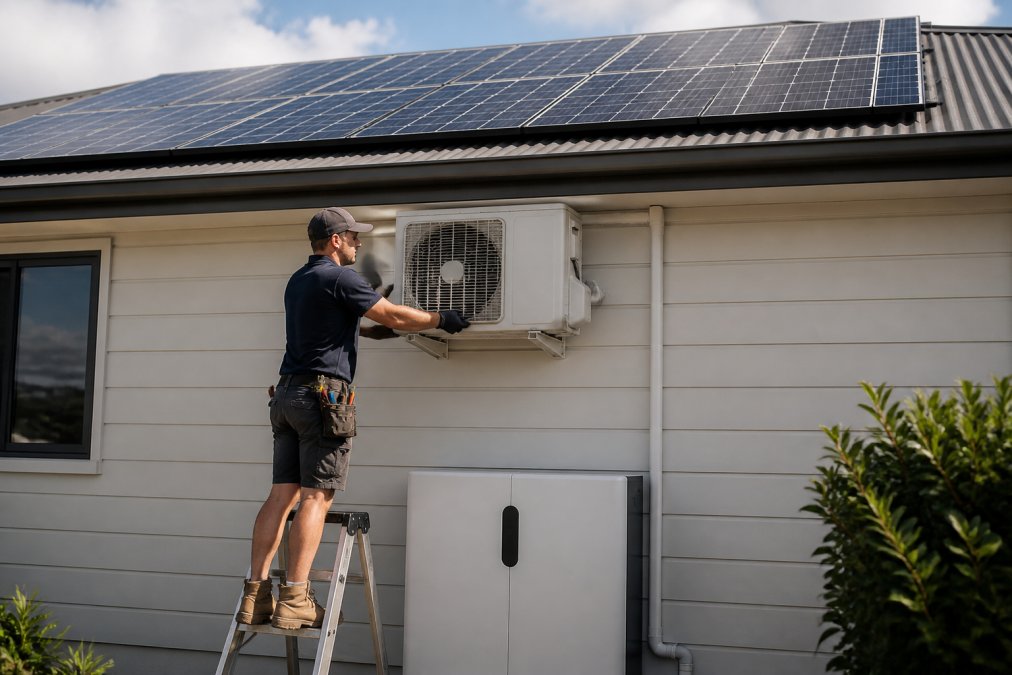
A reverse-cycle system paired with a 5-10 kW solar array and a 10-15 kWh battery can reduce annual heating costs by 60-80%. The payback period typically falls between 7-10 years.
Smart controls are essential. Program heating during peak solar generation (10 am to 3 pm) or draw from battery storage during evening demand to minimise grid reliance.
Install solar and battery storage first, then size the heating system to match available renewable capacity. A qualified installer can model your home’s heating load and solar generation profile to recommend optimal sizing.
Heritage homes require concurrent insulation, draught sealing, and electrical upgrades alongside heating system installation. Planning for these complementary works upfront reduces total project cost and maximises efficiency gains. Solar and battery integration transforms heating from a grid-dependent expense into a renewable-powered asset.
Conclusion
Energy-efficient heating is becoming a requirement for rental properties and a financial imperative for owner-occupiers. The shift from gas to electric heat pump technology is accelerating.
Premium Air delivers heating solutions tailored to your home’s specific needs and climate zone, managing the entire process from initial enquiry to installation with independent brand recommendations based on time-proven performance.
Get a free quote from Premium Air today. We’ll recommend the most cost-effective path to an efficient, comfortable heating system.
Frequently Asked Questions
What is the most cost-effective energy-efficient heating option?
Reverse-cycle air conditioning typically offers the lowest operating costs because heat pumps deliver more energy as heat than they consume in electricity. A system with a high coefficient of performance (COP) moves thermal energy rather than generating it, reducing kilowatt output needed. Hydronic systems run well when paired with off-peak electricity tariffs. The best choice depends on your home’s insulation, climate zone, and existing infrastructure. A professional assessment will identify which technology suits your specific layout and usage patterns.
Do I need to upgrade my heating system to meet minimum energy efficiency standards Victoria?
Minimum energy efficiency standards Victoria require rental properties to meet set performance benchmarks. If you own a rental, your system must comply with these standards. Owner-occupied homes aren’t legally mandated to upgrade, but improving thermal efficiency through draught sealing, insulation, and modern heating reduces long-term operating expenses and improves thermal comfort. The standards tighten over time, so upgrading now future-proofs your property and avoids compliance costs later.
What rebates are available through the Victorian Energy Upgrades program?
The Victorian Energy Upgrades program provides financial incentives for installing energy-efficient heating and cooling systems. Rebate amounts depend on the system type, capacity, and your property’s current energy rating. Eligible upgrades typically include reverse-cycle systems, hydronic heating, and insulation improvements. Contact the program directly or request a quote that includes available rebate calculations.
Can I integrate a new heating system with solar panels and battery storage?
Yes. Modern split systems and heat pumps integrate seamlessly with solar PV and battery storage. A heat pump’s flexible kilowatt output allows you to time heating during peak solar generation, storing excess energy in batteries for evening use. Hydronic systems work similarly. This integration reduces peak demand charges and maximises your renewable energy use. A mathematically engineered design ensures your heating capacity, solar output, and battery size work together efficiently across all climate zones and seasons.