


Last Updated: November 2, 2026
Quick Summary
To choose an efficient heating system, fix your home’s heat loss first by sealing draughts and improving insulation, then size the system to your home’s heat demand rather than guessing from floor area alone. For most homes, a reverse-cycle heat pump is the more efficient choice because it moves heat rather than generating it.
- Seal draughts and insulate before buying a heater, because heat loss sets the real workload.
- Size capacity to your design outdoor temperature, not the favourable conditions on the label.
- Oversizing causes short cycling and wasted energy; undersizing wears the system out faster.
- Compare lifetime cost over ten years, including purchase, installation, energy and maintenance.
- Zoning lets you heat only the rooms in use, cutting energy consumption meaningfully.
Table of Contents
- Start With Your Home’s Heat Loss, Not the Heater
- How to Size a Heating System Using Floor Area and Heat Demand
- Heat Pump vs Gas Heating: Which Suits Your Home?
- Heating System Efficiency Ratings Explained
- Heating System Running Costs: A Like-for-Like Comparison
- Heating One Room vs Whole-Home Heating: Zoning and Distribution
- Installation Constraints, Retrofit Compatibility and Backup Heating
- Get a Free Quote and an Engineered Sizing Assessment
- Frequently Asked Questions
Start With Your Home’s Heat Loss, Not the Heater
Here is the uncomfortable truth about how to choose an efficient heating system: the heater is rarely the biggest variable. Your home’s heat loss is.
Heat loss is the rate at which warmth escapes a building through its surfaces and gaps, and it sets the real workload your heating system must meet.
Before you compare a single model, walk your home and note the weak points. It will change how you shop.
Insulation, Draughts and Glazing Before Equipment
Seal first, then buy. Treating insulation as a “one day” project while spending thousands on a new heater means the unit works harder than it should.
- Ceiling insulation: the cheapest heat you’ll ever keep, and often the thinnest layer in older homes.
- Draught sealing: door snakes, weather strips and gap filler around frames and vents.
- Glazing: heavy curtains and pelmets help; double glazing helps more but costs more.
- Floor and wall insulation: harder to retrofit, but worth checking in cold rooms.
Watch out: replacing a heater before fixing draughts and insulation can leave you with a correctly sized system that now runs short cycles and feels less comfortable than the old one.
How to Size a Heating System Using Floor Area and Heat Demand
Sizing is where most buying decisions quietly go wrong. The right size matches your home’s heat demand on the coldest days, not the biggest unit that fits your budget. Heating capacity is measured in kilowatts, and heat demand depends on floor area, ceiling height, insulation, glazing, air leakage and climate.
Many installers start with a heat-load estimate per square metre, adjusted upward for poor insulation and large windows. It is a screening figure, not a specification; the only reliable number comes from an engineered assessment of the actual building.
The Factors That Move the Number
Floor area is the starting point, not the answer. Each of the following can shift the required capacity by a meaningful margin:
- Ceiling height. A room with 2.7 m ceilings holds more air to warm than one at 2.4 m, and tall or raked spaces stratify, so the heat you pay for collects near the ceiling.
- Insulation. Ceiling insulation matters most because heat rises; wall and floor insulation matter more in cold climates and suspended floors.
- Glazing. Single glazing loses heat far faster than double glazing, and large north-facing windows gain heat in winter but lose it at night. Curtains and pelmets help; they do not substitute for glazing performance.
- Air leakage. Draughts around frames, vents and exhaust fans can dominate heat loss in older homes, which is why sealing comes before sizing.
- Climate. The design outdoor temperature for your location sets the coldest condition the system must meet. A system sized for a mild coastal winter will be undersized inland.
- Occupancy and zoning. The number of rooms heated at once, and whether doors are open, changes the load the system must carry.
A Practical Sizing Sequence
- Measure floor area room by room and note ceiling height.
- Record glazing type and area, insulation level and obvious draughts.
- Apply a per-square-metre screening figure, then adjust for the factors above.
- Compare the result against manufacturer capacity tables at your design outdoor temperature, not at the mild test condition on the box.
- If the result is borderline, or the home is unusual, commission a room-by-room heat-loss calculation.
Manufacturer capacity figures are often quoted at favourable conditions. A unit rated at a given output may deliver noticeably less on a frosty morning, which is exactly when you need it. Ask for the capacity at your design temperature.
When to Pay for a Professional Load Calculation
Commission a professional load calculation when the home is unusual (heritage, extensions, large glazing, raked ceilings), when choosing a ducted or zoned system, when renovating and can still change insulation or glazing, or when quotes disagree widely. It is also the right step before committing to a heat pump, because output falls as outdoor temperature drops and the sizing margin matters more than for gas or resistance heaters. To understand why an engineered assessment is worth it, read why professional HVAC design matters for your home.
Common Sizing Mistakes That Waste Money
Oversizing is the classic error, and it is not harmless: a too-large heater heats the room quickly, then cycles on and off, wasting energy and creating uneven comfort. Undersizing is worse: the system runs flat out, never quite reaches the set temperature, and wears out faster.
- Guessing from floor area alone, ignoring ceiling height and glazing.
- Copying a neighbour’s system size without comparing building fabric.
- Trusting a salesperson who upsizes without measuring.
- Ignoring zoning, which changes demand room by room.
- Sizing on the label’s nominal output rather than capacity at your design temperature.
Heat Pump vs Gas Heating: Which Suits Your Home?
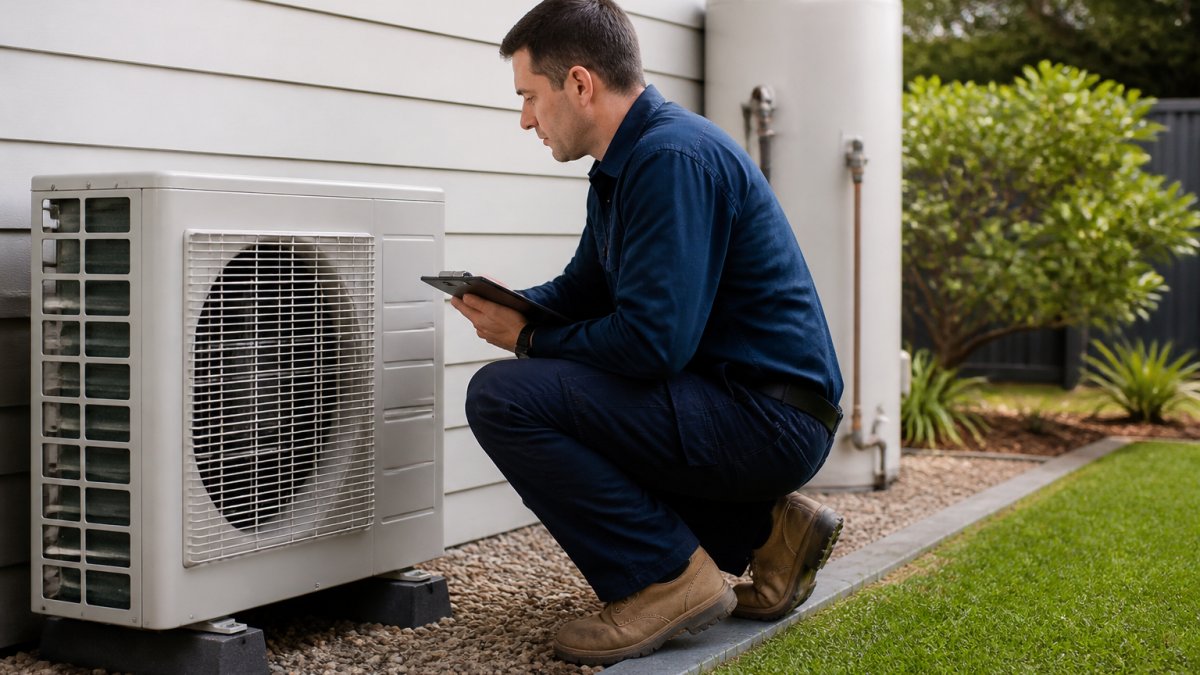
For most homes, a reverse-cycle heat pump is the more efficient choice because it moves heat rather than generating it.
That does not make gas obsolete.
| System type | How it heats | Best for | Watch out for |
|---|---|---|---|
| Reverse-cycle heat pump | Moves heat from outside air | Most homes, especially well-insulated ones | Performance drops in extreme cold; needs a good location for the outdoor unit |
| Gas ducted or space heating | Burns natural gas | Homes with existing gas and ductwork | Running costs track gas prices; less efficient than heat pumps |
| Electric resistance | Converts electricity directly to heat | Small rooms, spot heating | Highest running cost per unit of heat |
| Wood or pellet burner | Burns fuel for radiant warmth | Rural or well-vented homes | Maintenance, smoke, and fuel storage |
Heating System Efficiency Ratings Explained
Efficiency ratings let you compare heaters on a like-for-like basis, but only if you read the right label. For the actual method of calculating and comparing efficiency figures, see how to calculate HVAC system efficiency.
Seasonal efficiency is the average performance of a heating system across a full heating season, accounting for temperature changes and part-load operation.
Higher stars mean lower running costs, all else being equal. They do not mean lower upfront cost, and they do not override sizing. A highly rated unit that is the wrong size will still disappoint.
Heating System Running Costs: A Like-for-Like Comparison
Running costs are where the real money sits, and they are rarely compared fairly.
Here is the method, with a worked example. The figures below are illustrative only, substitute your own quotes and your own tariff, but the structure is what matters.
Step 2, Convert to energy consumed. Divide useful heat by seasonal efficiency.
Step 3, Apply your tariff. Running costs depend on your own electricity and gas tariffs, so calculate them using your current rates.
Step 4, Add maintenance and replacement. Heat pumps typically need a service every one to two years with a 10-15 year service life; gas ducted systems need duct and filter attention and similar replacement horizons; wood and pellet burners need flue cleaning and fuel storage. Spread those costs across the service life for an annualised figure.
Build the comparison in a spreadsheet with one column per system and one row per cost category. Change the tariff and hours assumptions and watch which options are sensitive to them, that tells you where the real risk sits.
Three assumptions do most of the work, so state them explicitly: your local energy prices, your annual heating hours, and the seasonal efficiency you are prepared to rely on. The Australian Energy Regulator publishes energy market information that helps you find current rates, and the Energy Rating website publishes the label figures you need for step 2. Installation pricing depends on your home, so we recommend requesting a quote for your specific job.
Heating One Room vs Whole-Home Heating: Zoning and Distribution
Heating every room when you use two is a waste, and zoning fixes it. Zoning divides a home into separately controlled areas, so you heat the rooms in use and leave the rest off.
Distribution matters as much as generation. Radiant heating warms surfaces and people directly, feeling comfortable at lower air temperatures. Convection heating warms air, which rises and stratifies.
A thermostat set a degree or two lower, combined with zoning, often saves more than upgrading equipment alone.
Installation Constraints, Retrofit Compatibility and Backup Heating
The best system on paper can be wrong for your house. Installation constraints decide as much as efficiency: outdoor unit space and clearance, electrical capacity, duct routes, wall construction and whether existing pipework can be reused.
- Outdoor unit placement: needs airflow and access for servicing.
- Electrical supply: heat pumps may need a dedicated circuit.
- Ductwork: old ducts may be undersized or leaking.
- Retrofit compatibility: existing gas lines and flues shape what you can reuse.
Backup heating deserves a mention. In extreme cold, heat pump output falls, so some homes benefit from a secondary heat source or a system sized with a margin. Getting this right is an engineering question, not a sales one.
Get a Free Quote and an Engineered Sizing Assessment
The difference between a good heating decision and an expensive one usually comes down to measurement. A proper assessment checks heat loss, calculates heat demand room by room, and recommends a system that fits rather than the biggest unit available. That is how we work at Premium Air: mathematically engineered sizing, independent brand recommendations based on time-proven performance rather than sales bias, and removal of your old unit included in the installation cost.
When you’re ready, contact us to arrange your free quote and engineered sizing assessment.
Frequently Asked Questions
What is the most energy-efficient way to heat a home?
Reverse-cycle air conditioning, or a heat pump, usually delivers the most heat per unit of electricity because it moves heat rather than generating it. How much you save depends on insulation, zoning and thermostat settings. Running a heat pump in a well-sealed room at a moderate temperature setting generally beats heating the whole house. Ask for a room-by-room heat load assessment so the system is sized to actual heat demand, not guesswork.
Are heat pumps more efficient than gas heaters?
In most homes, yes. A heat pump can produce several kilowatts of heat for every kilowatt-hour of electricity it uses, while gas heating converts fuel directly and loses some heat through flues and ductwork. The gap widens on well-insulated homes with zoned systems. Gas can still suit homes with existing ducted gas infrastructure or where a qualified installer confirms the retrofit is impractical. Compare running costs on your actual tariff before deciding.
How do I compare the efficiency of different heating systems?
Check the efficiency rating label and compare like with like: heat pumps are rated by their coefficient of performance or star rating for heating, while gas units carry a star rating for energy use. Then convert both to running costs using your electricity and gas tariffs per kilowatt-hour. A higher star rating on a badly sized unit still wastes money, so pair the rating with a proper heat load calculation for your floor area and climate.
What size heating system do I need?
Size follows heat demand, not just floor area. A qualified assessor measures room volume, insulation, glazing, draughts and orientation, then calculates the kilowatts needed to hold a comfortable temperature on a cold day. Oversizing wastes upfront cost and causes short cycling, which wears parts faster. Undersizing leaves rooms cold on the coldest nights. Get the calculation in writing before you compare quotes.
The riskiest part of choosing efficient heating isn’t picking the wrong brand, it’s skipping the measurement that tells you what your home actually needs. Premium Air removes that guesswork with engineered sizing, independent brand recommendations and old-unit removal included in the install. Get started with Premium Air and heat your home the right size, the first time.