


Last Updated: November 5, 2026
Quick Summary
There is no single age that means you should replace old HVAC equipment; it depends on repair history, running costs, and how well the system still heats and cools. Start planning a replacement at 15 years or older with frequent breakdowns, or sooner if repairs approach half the price of a new system.
- Split systems last 10 to 15 years, while ducted reverse cycle and gas ducted heating last 15 to 20 years.
- If a repair costs close to half the price of a new system, replacement often makes more sense.
- Two or more repairs in the past two years is a sign to lean toward replacement.
- A cheap part like a fan motor on a system under 10 years old is usually worth repairing.
- Plan your replacement before the system fails so you can compare options without a heatwave scramble.
Table of Contents
- How to Tell When to Replace an Old HVAC Unit
- Signs Your Air Conditioner Needs Replacing
- Air Conditioner Lifespan: What to Expect by System Type
- Air Conditioner Repair or Replace: A Decision Framework
- Cost to Replace an Air Conditioner and What You Get Back
- Sizing, Ductwork and Installation Quality: Why the Replacement Matters
- Planning a Replacement Before Your System Fails
- Book a Free Assessment Before You Replace Old HVAC Equipment
- Frequently Asked Questions
How to Tell When to Replace an Old HVAC Unit
The short answer: there is no single age that means “replace it now.” The right time to replace an old HVAC unit depends on repair history, running costs, and how well the system still heats and cools your home.
Below, we explain exactly how to judge your own system. We cover the signs, the expected lifespan of each part, a practical decision framework, and what a replacement involves.
First, here is the quick version:
- Under 10 years old, few repairs: keep it, maintain it.
- 10 to 15 years old, one or two repairs: repair if the cost is small.
- 15 years or older, frequent breakdowns: start planning a replacement.
We also want to clear up one common myth. Many guides say “replace at 15 years, full stop.” That advice ignores how the system was treated.
Signs Your Air Conditioner Needs Replacing
Watch for these warning signs. Each one points to a system under real strain:
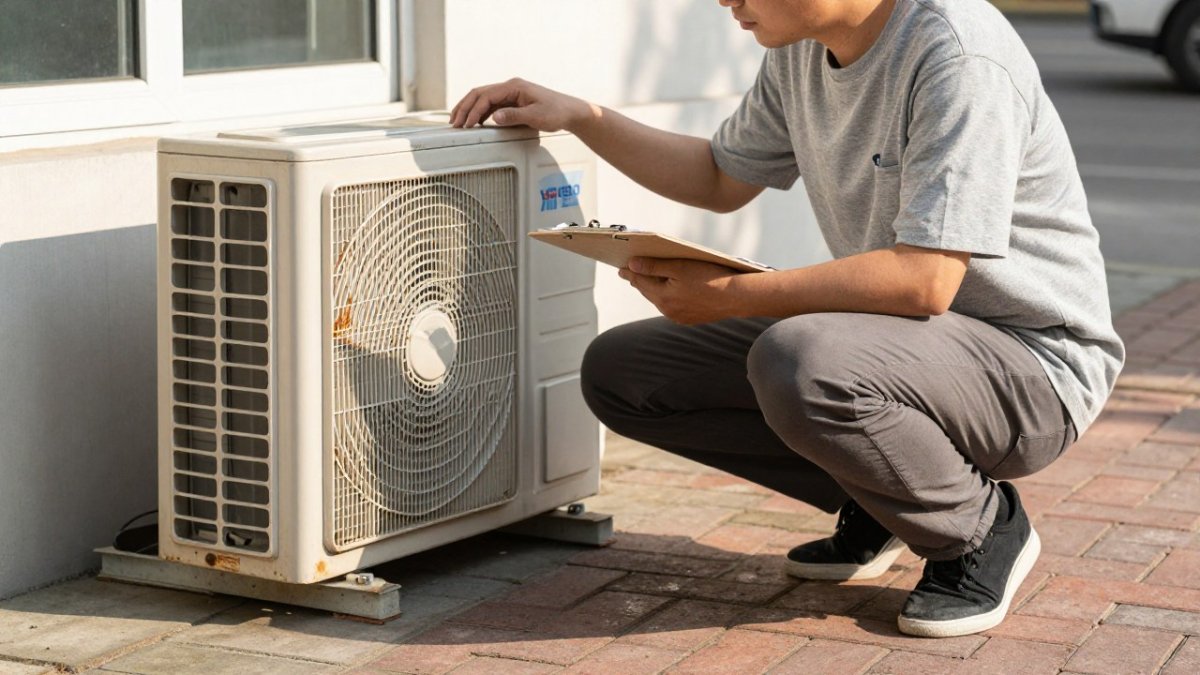
- Little or no cold air on a hot day, even with the unit running
- Uneven temperatures between rooms or zones
- Frequent breakdowns, especially two or more in a single season
Some of these are cheap fixes. A dirty filter can cause weak airflow and high bills. A blocked drain can cause a leak. But when several signs appear together, and the system is already old, replacement usually wins on cost.
Watch out: a system that ices up or leaks refrigerant is not just inefficient. It can damage ceilings and walls. Get it looked at rather than ignored.
Air Conditioner Lifespan: What to Expect by System Type
The expected lifespan of an air conditioner varies by system type. These are ranges, not promises. Regular maintenance and a quality installation push you toward the top of the range, while heavy use, coastal salt air, and dusty conditions pull you toward the bottom.
Different system types age differently. Here is the general picture, with the factors that shorten or extend each one:
- Split system: 10 to 15 years with regular servicing. Shortened by constant use in a hot climate and by dirty filters; extended by annual coil cleaning and shade on the outdoor unit.
- Ducted reverse cycle: 15 to 20 years, though ductwork can degrade sooner. Shortened by leaky or unsealed ducts that make the unit work harder; extended by sealing and insulating ducts.
- Gas ducted heating: 15 to 20 years with annual servicing. Shortened by skipped services and blocked flues; extended by regular filter and burner cleaning.
A useful way to think about it: the nameplate age is a starting point, but the effective age depends on how many hours the system runs, how well it is serviced, and what the outdoor unit is exposed to.
Lifespan of Individual Components
The whole system rarely fails at once. Usually, one part gives out first.
- Compressor: often the longest-lived part, but the most expensive to replace. A compressor failure on an old system is usually the end of the road, because the cost approaches a large share of a new unit.
- Evaporator coil: prone to leaks and corrosion over time, especially in coastal or humid conditions. A leaking coil can sometimes be repaired, but repeated leaks point to replacement.
- Outdoor unit fan motor: a common failure point after a decade. It is a modest repair, and replacing it can add years to an otherwise sound system.
So when a technician quotes a repair, ask which part failed and how old the rest of the system is.
Watch out: a repair quote that only covers the failed part can hide a second problem, such as a corroded coil or a failing board.
Here is the expected lifespan for each system type, along with what shortens or extends it.
| System type | Expected lifespan | Shortened by | Extended by |
|---|---|---|---|
| Split system | 10 to 15 years | Constant use in a hot climate, dirty filters | Annual coil cleaning, shade on outdoor unit |
| Ducted reverse cycle | 15 to 20 years | Leaky or unsealed ducts | Sealing and insulating ducts |
| Gas ducted heating | 15 to 20 years | Skipped services, blocked flues | Regular filter and burner cleaning |
| Evaporative cooler | 10 to 15 years, less in dusty areas | Dust and mineral build-up on pads | Pad replacement, water treatment |
| Heat pump | 10 to 15 years | Frequent defrost cycles in cold, damp conditions | Correct charge, clear drainage |
Air Conditioner Repair or Replace: A Decision Framework
Use this framework to decide between air conditioner repair or replace.
Step 2: Estimate replacement cost for a system that suits your home.
Step 4: Check the repair history. Frequent breakdowns mean the system is telling you something. One repair in 12 years is normal.
Step 5: Weigh comfort and running costs. A new system often uses less energy and holds temperature more evenly.
A Simple Decision Tree
Work through these questions in order. The first “yes” usually settles the decision:
- Is the repair cost more than half the price of a new system? If yes, lean toward replacement.
- Is the system 15 years or older and facing a major repair (compressor, coil, or board)? If yes, lean toward replacement.
- Have you had two or more repairs in the past two years? If yes, lean toward replacement.
- Is the failed part a cheap one (fan motor, capacitor, drain) on a system under 10 years old? If yes, repair is usually the better call.
- Are parts hard to source or on a long lead time? If yes, weigh replacement, because a long wait in peak season is its own cost.
If the answers point in different directions, the tie-breaker is running cost. An old, inefficient unit can cost more over a few years than the repair saves, so estimate that before you decide.
Estimating Payback from a New System
You do not need a laboratory to estimate whether a new system will pay back its cost. Use your own bills and the efficiency ratings on the labels.
- Find your annual running cost. Add up your heating and cooling bills for a full year, or use the seasonal figures from your energy retailer.
- Compare efficiency ratings. A new system with a higher star rating uses less energy for the same output. The difference in running cost is the annual saving.
- Divide the replacement cost by the annual saving. That gives a rough payback period in years. If the payback is longer than the remaining life of the old system, repair may still be the better short-term call.
A common pattern is that the savings are largest where the old unit is inefficient and the climate is extreme, and smallest where the old unit is already reasonably efficient. Treat the payback figure as a guide, not a guarantee, because savings vary with climate, usage, and energy prices.
The 50% Repair-Cost Rule and Its Limits
The 50% repair-cost rule is a rough guide: if a repair costs more than half the price of a new system, replace it.
It ignores the system’s age. A 4-year-old unit with a big repair may still be worth fixing. It also ignores running costs.
Use the rule as a prompt, not a verdict. A professional assessment adds the detail the rule leaves out, including the condition of the coil, the ducts, and the controls.
Cost to Replace an Air Conditioner and What You Get Back
The cost to replace an air conditioner depends on the system type, the size of your home, and the condition of your ductwork.
What drives the cost:
- System type and capacity: a small split system costs less than full ducted reverse cycle
- Ductwork: new or repaired ducts add to the job
- Removal and disposal: removal of the old unit is included in our installation cost
- Access and layout: a tricky roof space takes more labour
For a deeper cost breakdown, see our guide to the cost of replacing ducted heating. If budget is the sticking point, our interest free payment terms let you spread the cost.
A replacement can deliver more even comfort and may reduce running costs. Ask about the warranty terms for any system you consider.
Sizing, Ductwork and Installation Quality: Why the Replacement Matters
A replacement is only as good as its installation. Correct sizing matters, because an oversized or undersized unit does not perform as intended.
Ductwork matters just as much. Leaky or poorly sealed ducts can lose cool air before it reaches the room.
To see what a proper installation involves, read our guide to the HVAC system installation process.
Planning a Replacement Before Your System Fails
The best time to replace an old HVAC unit is before it dies. A planned replacement lets you compare options, book a convenient date, and avoid a scramble in the middle of a heatwave.
Start planning when your system hits these markers:
- It is 12 or more years old
- You have paid for two or more repairs in the past two years
- Your bills keep climbing
- Parts are getting hard to source
A planned job also means you can weigh efficiency upgrades and pick a system that suits your home, rather than taking whatever is available in a hurry.
Book a Free Assessment Before You Replace Old HVAC Equipment
Deciding to replace old HVAC equipment is easier with a clear, honest assessment. We aim to recommend a system that suits your needs, and we give independent brand recommendations based on proven performance. One point of contact handles your job from enquiry to installation.
Before you commit, read our guide on how to compare HVAC installation quotes so you can judge each quote on the same terms.
Frequently Asked Questions
How many years should an air conditioner last?
Most split systems and ducted units run for around 10 to 15 years, while well-maintained heat pumps and some premium systems can reach 15 to 20 years. Lifespan depends heavily on maintenance history, how hard the system works, and installation quality. A unit sized correctly and serviced annually will usually outlast one that was oversized and neglected. Once a system passes the 12-year mark, start budgeting for replacement rather than waiting for a breakdown.
Is it better to repair or replace an old air conditioner?
Use repair cost against replacement cost as your guide. If a single repair costs more than half the price of a new system, or you are facing repeated breakdowns within a couple of seasons, replacement usually makes more financial sense. A system under 10 years old with one isolated fault is normally worth repairing. Ask for a written comparison of both options so the decision is based on numbers, not pressure.
Can an old air conditioner use more electricity?
Yes. Older units often run on less efficient refrigerants and compressor technology, so they draw more power to deliver the same cooling. Wear and tear makes this worse: a failing compressor or dirty coils force the system to run longer each cycle. If your energy bills have climbed without a change in usage, that is a strong signal to have the system assessed before the next summer.
Should I replace my air conditioner if it still works?
A working system does not automatically need replacing. Replace when the numbers stack up: age beyond 12 to 15 years, rising running costs, frequent repairs, or refrigerant that is being phased out. Planning a replacement on your terms is cheaper and less stressful than an emergency swap in a heatwave. A professional assessment can tell you how much life is realistically left in the unit.
If your system is showing its age, don’t wait for it to fail on the hottest day of the year. Get started with Premium Air and book a free assessment, with engineered sizing, independent brand advice, and removal of your old unit included.